

 Available 24/7
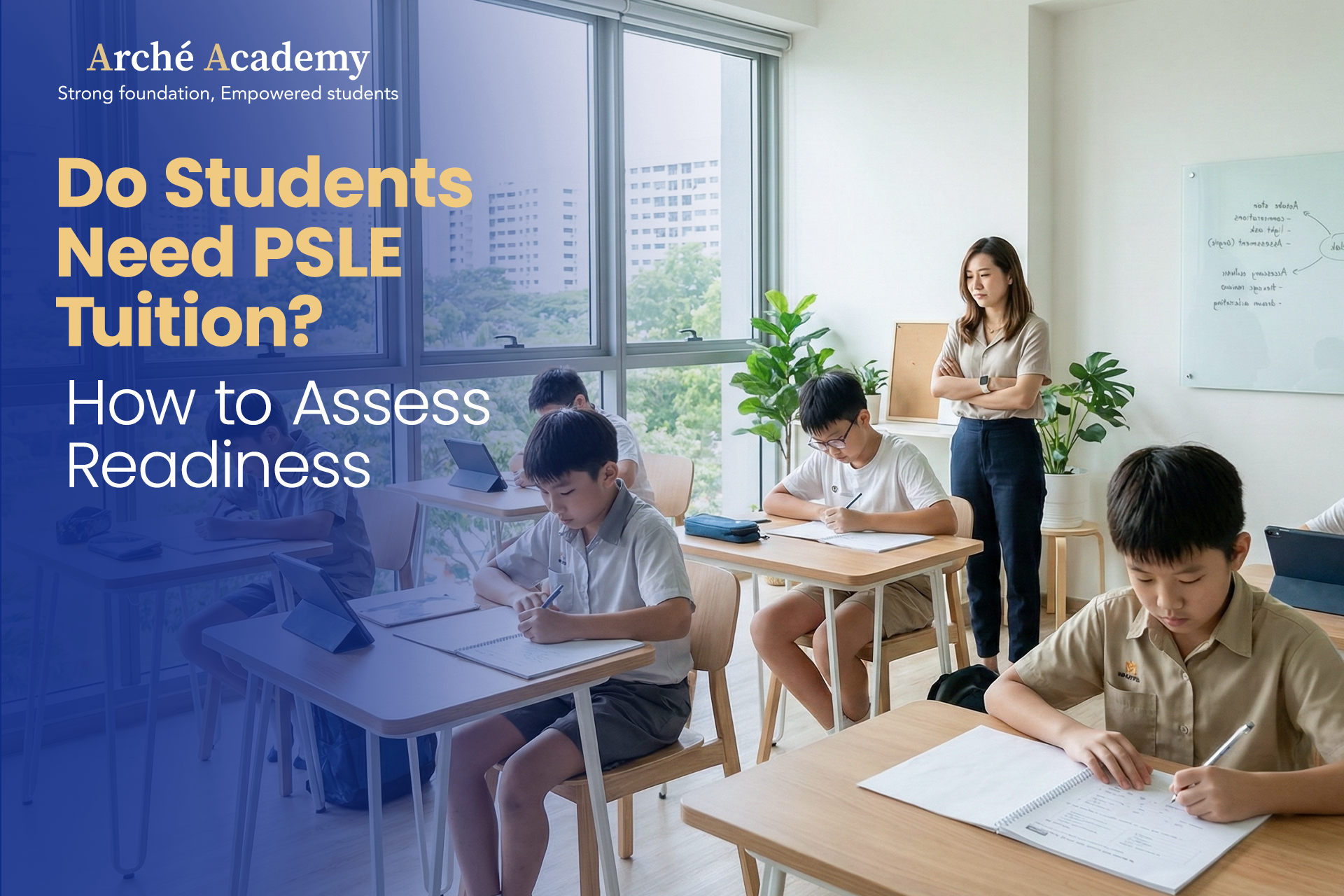
Do students need PSLE tuition, or is it becoming an automatic decision driven by fear rather than readiness? This blog will walk you through how to assess PSLE readiness properly, when tuition adds real value, and how parents can decide without committing prematurely or unnecessarily.
Why This Question Matters More Than Ever

PSLE has not become harder in content, but it has become less forgiving in structure. Under Singapore’s current assessment system, gaps surface earlier and outcomes feel less predictable to parents. This environment has normalised tuition as a default, even when it may not be the right intervention.
The decision is not whether tuition is good or bad. The decision is whether it is necessary for your child at this stage.
What “PSLE Readiness” Actually Means

Readiness Is Not About Marks Alone
A child scoring well in school tests is not automatically PSLE-ready. Readiness reflects whether a student can:
- Apply concepts in unfamiliar formats
- Explain reasoning clearly under time pressure
- Recover after making mistakes
These behaviours matter more than raw scores.
Academic Independence as a Readiness Indicator
Academic independence shows up in small but telling ways. A ready student:
- Attempts questions before asking for help
- Checks work systematically
- Can explain why an answer works, not just state it
When these habits are absent, tuition often becomes a support structure rather than an accelerator.
Where School Support Has Natural Limits
What Schools Are Designed to Do Well
Primary schools in Singapore follow a national syllabus set by the Ministry of Education. Teachers manage full classrooms, deliver curriculum coverage, and prepare students broadly for national assessments.
They do this well at scale.
Where Individual Gaps Slip Through
What schools cannot always provide is:
- Personalised reteaching for recurring misconceptions
- Targeted remediation at a student-specific pace
- Time to train exam decision-making one student at a time
This is not a failure of schools. It is a structural reality.
Learning Gaps That Signal Tuition May Be Needed
Gaps That Persist Across Topics
Some gaps resolve naturally with maturity. Others repeat across chapters and subjects. Tuition becomes relevant when a child:
- Makes the same type of mistake despite correction
- Understands concepts in isolation but not in application
- Struggles to transfer learning across question types
These are not effort problems. They are processing problems.
Emotional Indicators Parents Often Miss
Readiness is also emotional. Watch for:
- Shutdown during challenging questions
- Over-reliance on step-by-step prompting
- Avoidance of independent practice
When confidence erodes, structured guidance can prevent long-term disengagement.
When PSLE Tuition Is Often Unnecessary
Students With Stable Foundations
Some students demonstrate:
- Consistent understanding across subjects
- Ability to self-correct mistakes
- Calm responses to unfamiliar questions
For these students, tuition may add workload without improving outcomes.
The Risk of Over-Intervention
Excessive tuition can:
- Reduce intrinsic motivation
- Replace thinking with dependency
- Increase stress without improving readiness
Educational psychology studies consistently show that over-scaffolding weakens self-regulation, a concern echoed in OECD findings on student agency and independent learning
A Practical PSLE Readiness Assessment for Parents
Step One: Observe Before You Enrol
Before committing, parents should observe how their child:
- Approaches new question types
- Handles mistakes
- Responds to feedback
This observation period is more reliable than a single test score.
Step Two: Separate Effort From Understanding
Ask whether difficulties come from:
- Lack of effort
- Weak foundations
- Poor exam strategy
Tuition addresses the second and third, not the first.
Step Three: Clarify the Objective
A sound PSLE tuition decision answers one question clearly:
What problem are we trying to solve?
If the answer is vague, the intervention usually is too.
How Tuition Should Function When It Is Needed
Tuition as a Diagnostic Tool
Effective tuition identifies patterns. A good tutor can tell you:
- What errors repeat
- Why they occur
- How long remediation realistically takes
Without this clarity, tuition becomes guesswork.
Structure Over Volume
Tuition works when it is:
- Planned around specific gaps
- Limited to what the child can absorb
- Reviewed regularly for impact
This is why families often explore structured academic pathways through centres listed under academic classes in Singapore rather than ad-hoc lessons.
The Role of Parents in the Decision
Avoiding Comparison-Driven Choices
Many tuition decisions are driven by other parents’ actions, not the child’s needs. This creates mismatched expectations and unnecessary pressure.
A PSLE tuition decision should be child-specific, not socially reactive.
Setting the Right Tone at Home
Parents influence readiness by:
- Valuing progress over perfection
- Encouraging independent attempts
- Keeping routines predictable
Tuition cannot override home dynamics.
Reassessing the Decision Over Time
Readiness Changes
A child who does not need tuition in P5 may benefit from it in P6, or vice versa. Readiness is not static.
Reassess:
- After major exams
- When new formats are introduced
- When confidence shifts noticeably
Tuition Is a Tool, Not a Commitment
Good tuition has entry and exit points. Staying enrolled without reviewing impact defeats its purpose.
Conclusion
Some students do not need PSLE tuition. Every student needs to know when they are ready, what their learning gaps are, and what their support limits are. Only when tuition solves a specific problem and makes students more independent, rather than taking their place, does it become useful.
Before you think about PSLE tuition, make sure you know how ready your child is. Find out how Arche Academy helps students with structured tests and specific advice.
FAQs About Do Students Need PSLE Tuition
Do all students need PSLE tuition?
No. Students with strong academic independence and stable foundations may not benefit from additional tuition.
How can parents assess PSLE readiness?
Observe how your child applies concepts, handles mistakes, and works independently across subjects.
When does tuition become helpful?
Tuition helps when learning gaps persist, confidence drops, or exam strategies are weak despite effort.
Can tuition replace school learning?
No. Tuition complements school instruction but cannot replace classroom teaching aligned to MOE standards.
Should tuition start in P5 or P6?
It depends on readiness. Some students need early support, while others only require short-term calibration later.