

 Available 24/7
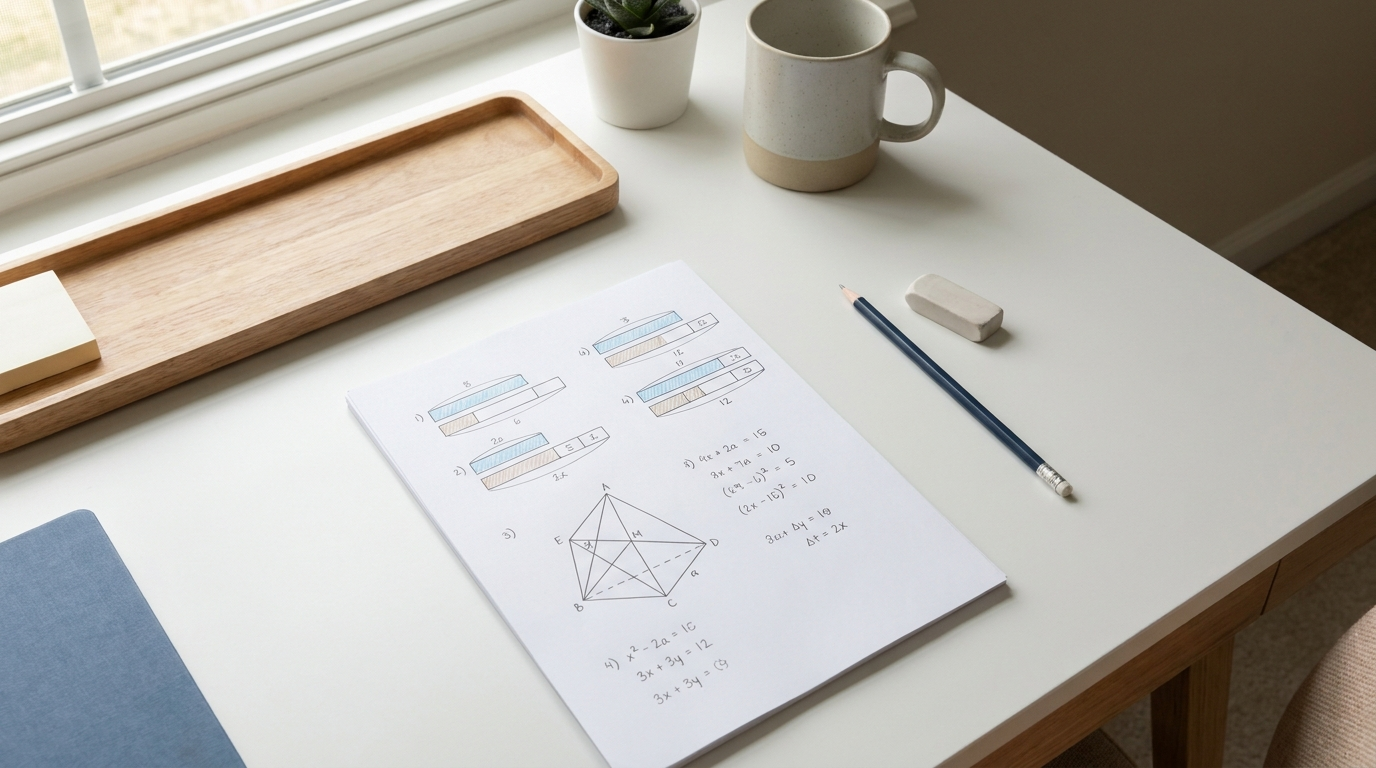
Every PSLE Math paper contains a handful of questions that are designed to be unfamiliar. They do not test whether a child has memorised a method; they test whether the child can work out which method to use when the question does not tell them. These are the higher-order, non-routine questions, and they are where the strongest scores are separated from the merely competent ones.
The good news for parents is that “non-routine” does not mean “unpredictable”. These questions draw on a recognisable set of question types and problem-solving strategies. A child who learns to recognise the type and choose the right strategy can approach even an unfamiliar question with a plan rather than panic. This guide explains how.
What Makes a Question “Non-Routine”
A routine question signals its method: the child recognises it as a fraction problem or a ratio problem and applies the procedure they have practised. A non-routine question hides the method. It combines concepts, wraps the mathematics in an unfamiliar context, or requires several linked steps where the path is not obvious from the wording.
This is exactly why able children who ace their practice worksheets can still stumble in Paper 2. The worksheet groups questions by topic, so the method is implied. The exam does not. Recognising that non-routine questions are testing method selection, not method execution, is the first shift a child needs to make. Our step-by-step method for PSLE problem sums sets out the underlying framework this article builds on.
Recognising the Common Question Types
Non-routine questions feel infinite, but they cluster into a manageable set of recognisable shapes — among them before-and-after situations, problems involving equal or unchanged quantities, comparison and difference problems, and questions where a total is repeatedly shared or grouped. Each shape has tell-tale wording and a strategy that tends to fit.
Teaching a child to pause and ask “what kind of problem is this?” before touching the numbers is one of the most powerful habits in PSLE Math. A child who can name the shape of the problem has already narrowed dozens of possible approaches down to the one or two that usually work.
Choosing the Right Heuristic
PSLE rewards a small toolkit of heuristics, and the skill in non-routine questions is matching the tool to the problem. Drawing a model makes part-whole and comparison relationships visible. Working backwards suits before-and-after problems where the end state is known. Making a systematic list or looking for a pattern cracks questions that would be slow to brute-force. Making a supposition — assuming a value and adjusting — unlocks a certain family of questions that otherwise look impossible.
The point is not to memorise which heuristic goes with which question, but to understand what each tool does, so the child can reach for the one that fits. A child who understands that the model method makes relationships visible will naturally reach for it when a problem is about relationships — and that judgement is what non-routine questions reward. Our roundup of PSLE problem-sum strategies that actually work goes through these heuristics with examples.
Earning Method Marks Even When Stuck
One of the most valuable things a child can learn about these questions is that marks are not all-or-nothing. Paper 2 problem sums award method marks, which means a child who sets up a correct model, shows a sensible approach, or reaches a correct intermediate step earns marks even if the final answer is wrong.
This changes exam strategy completely. A child who has been taught to always show clear working — the model, the steps, the reasoning — banks partial credit on hard questions instead of leaving a blank. The habit to build is: attempt the setup, show the thinking, and never leave a hard question empty. Under time pressure, those method marks add up to whole grade bands.
Building the Skill Over Time
Non-routine problem solving is not learned by doing more of the same routine practice. It is built by working through varied, unfamiliar questions and, crucially, by reflecting on why a particular strategy fit — so the child develops judgement, not just a bigger bank of memorised methods.
This is where guided practice makes the biggest difference. A tutor can present a child with unfamiliar questions in a supported setting, ask the questions that build method-selection judgement — “what type is this?”, “what does the model show you?” — and coach the habit of showing working that banks method marks. Those are difficult skills for a child to build alone, precisely because the whole point is handling the unfamiliar.
Ready to get started? Explore our PSLE Math Tuition programme
Frequently Asked Questions
What are non-routine questions in PSLE Math?
They are questions designed to be unfamiliar — combining concepts, using an unusual context, or requiring several linked steps — so that the method is not obvious from the wording. They test whether a child can choose the right approach, not just execute a method they have practised.
Why does my child do well on worksheets but struggle in Paper 2?
Worksheets group questions by topic, so the method is implied; the exam mixes question types, so the child must identify the method themselves. Non-routine questions test method selection rather than execution, which is a different and less-practised skill.
What heuristics help with hard PSLE Math questions?
The core toolkit includes drawing models, working backwards, making a systematic list or spotting a pattern, and making a supposition. The skill is matching the tool to the problem — understanding what each heuristic does so the child can reach for the one that fits.
How can a child earn marks on questions they cannot fully solve?
Paper 2 awards method marks, so a correct model, a sensible approach, or a right intermediate step earns credit even without the final answer. Teaching a child to always show clear working and never leave a hard question blank banks partial marks that add up.
How do you build non-routine problem-solving skills?
Through varied, unfamiliar practice combined with reflection on why a strategy fit — not through repeating routine worksheets. Developing method-selection judgement is what allows a child to approach a question they have never seen with a plan.
The hardest PSLE Math questions are unfamiliar by design, but they are not unbeatable. A child who learns to recognise the question type, choose a heuristic that fits, and show working that banks method marks can face a non-routine question with a strategy instead of a blank page — and that composure under pressure is what the top scores are made of.