

 Available 24/7
Small group PSLE Math tuition is often compared with one-to-one tutoring, but most parents are not sure which actually improves results. The decision matters because class format affects how students learn, not just how much help they receive. This blog will walk you through how small group and one-to-one PSLE Math tuition work in Singapore, what each does well, and how to choose based on learning outcomes rather than assumptions.
Parents usually begin this comparison when exploring structured PSLE Math tuition in Singapore and noticing that class size varies widely across centres.
Why Class Size Matters in PSLE Math Learning
PSLE Math is not just about getting answers
PSLE Mathematics tests how well students apply concepts under exam conditions. It rewards clear working, correct reasoning, and the ability to handle unfamiliar problem types.
That means learning effectiveness depends on how a student thinks, not only how often they practise.
Class size affects whether a tutor can see that thinking process.
The real question parents should ask
The choice is not small group versus one-to-one in isolation.
The real question is whether the class format allows:
- Mistakes to be noticed early
- Reasoning to be corrected, not ignored
- Confidence to grow without dependence
Those outcomes differ sharply between formats, depending on how the class is run.
What One-to-One PSLE Math Tuition Does Well
Maximum attention, minimum distraction
One-to-one PSLE Math tuition offers full attention from the tutor. The pace matches the student exactly, and lessons can stop whenever confusion appears.
This format works well for:
- Students with large foundational gaps
- Learners who are easily distracted
- Short-term intervention for specific weaknesses
Parents often turn to a private PSLE Math tutor in Singapore when their child has lost confidence or fallen behind.
Faster diagnosis of weak areas
In a one-to-one setting, a tutor can immediately spot why an error occurs. There is no need to manage group dynamics.
This allows:
- Immediate correction
- Direct explanation
- Customised practice
For some students, this quick feedback loop is essential.

Where One-to-One Tuition Falls Short
Over-reliance on guidance
A common issue with long-term one-to-one tuition is dependence.
Some students perform well with a tutor beside them but struggle when left alone in exams. They are used to prompts, hints, or reassurance that do not exist during PSLE.
This affects learning outcomes even when homework is completed correctly.
Limited exposure to alternative thinking
PSLE Math questions often allow more than one method.
In one-to-one tuition, students see only one way to solve a problem. They miss the chance to hear how peers approach the same question differently.
That limits flexibility, which matters when exam questions do not match familiar formats.
What Small Group PSLE Math Tuition Does Well
Learning through comparison and discussion
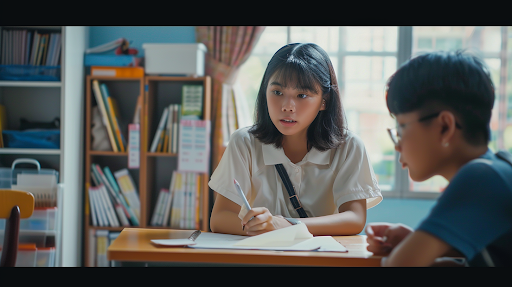
In a small group PSLE Math tuition setting, students are exposed to different ways of thinking.
They hear classmates explain solutions. They see alternative methods. They learn that their way is not the only way.
This improves:
- Conceptual understanding
- Adaptability
- Confidence with unfamiliar questions
These are direct contributors to PSLE performance.
Personalised attention without isolation
Well-run small group classes balance attention and independence.
Teachers can still observe individual errors, but students are encouraged to think and respond without constant prompting. This builds exam-ready habits.
Class size matters here. Small groups work when numbers are controlled and feedback remains specific.
Why Small Group Tuition Often Improves PSLE Outcomes More Consistently
Feedback quality scales better than attention
Attention is limited. Feedback is teachable.
In small group tuition, teachers develop systems to track:
- Repeated mistakes
- Weak reasoning patterns
- Common misconceptions
This allows correction across students without singling anyone out, which keeps confidence intact.
Better alignment with exam conditions
PSLE is not a one-to-one assessment.
Students sit in a room, work independently, and manage pressure without guidance. Small group tuition mirrors this environment more closely than private tutoring.
That alignment improves transfer from class to exam.
Students work independently under time pressure, without prompts or guidance. This structure is set by the examining authority and applies uniformly across schools. According to the PSLE assessment structure published by SEAB, students are evaluated not just on final answers but on method, reasoning, and accuracy under exam conditions.
Small group tuition mirrors this environment more closely than one-to-one settings, which explains why skills transfer more reliably for many students.
What Actually Determines Tuition Effectiveness
Class size alone is not enough
Small group tuition fails when:
- Groups are too large
- Teaching becomes lecture-based
- Individual errors are ignored
One-to-one tuition fails when:
- Tutors over-prompt
- Lessons lack structure
- Students become passive
Effectiveness depends on how teaching is structured, not just how many students are present.
Teaching method matters more than format
Effective PSLE Math tuition includes:
- Clear explanation of why methods work
- Practice with unfamiliar problem types
- Correction of reasoning, not just answers
- Alignment with the MOE syllabus progression
The Ministry of Education’s Primary Mathematics syllabus emphasises application and reasoning across topics, not isolated drilling.
Any tuition format that ignores this will struggle to produce consistent improvement.
When One-to-One Tuition Makes Sense
Short-term, targeted support
One-to-one PSLE Math tuition works best when used deliberately.
Examples include:
- Bridging a sudden drop in performance
- Rebuilding confidence after repeated failure
- Addressing a specific topic gap before moving back to group learning
It is most effective as a supplement, not a permanent solution.
Students who struggle in group settings
Some students genuinely learn better alone.
For these learners, one-to-one tuition can stabilise foundations before transitioning to small group classes later.
The goal should still be independence, not reliance.
When Small Group Tuition Is the Better Long-Term Choice
Building exam-ready thinking habits
Small group tuition trains students to:
- Attempt first before asking
- Listen to others’ explanations
- Adjust methods when their own fails
These habits directly affect exam performance.
Sustainable progress across levels
PSLE preparation is not about one good test.
Students need steady improvement across Primary 4, 5, and 6. Small group tuition supports this progression better because it builds resilience and flexibility over time.
Why Trial Classes Are Critical Before Deciding
Observing learning behaviour beats marketing claims
No brochure can tell you how your child learns.
A trial class shows:
- Whether the pace suits the student
- How mistakes are handled
- Whether feedback is clear or generic
This is especially important when comparing small group and one-to-one formats.
The importance of this evaluation is explained in detail in why trial classes matter more than you think, particularly for PSLE-level decisions.
What parents should watch during a trial
Pay attention to:
- Whether the teacher corrects reasoning
- Whether students are encouraged to explain
- Whether the child remains engaged without constant prompting
These signals matter more than worksheets or homework volume.
Making the Right Choice for Your Child
There is no universal best option
Small group PSLE Math tuition works better for most students because it builds independence, flexibility, and exam readiness.
One-to-one PSLE Math tuition works better for specific situations that require focused intervention.
The mistake is choosing based on fear or reputation rather than learning needs.
A simple decision framework
Choose one-to-one if:
- Gaps are severe
- Confidence is very low
- Support is needed urgently
Choose small group if:
- Foundations exist but are uneven
- Reasoning needs strengthening
- Exam habits need to be built
Parents who understand this difference tend to make calmer, more effective decisions.
Conclusion
Small group and one-to-one PSLE Math tuition each have a place in Singapore’s education landscape. What improves results is not class size alone, but how teaching supports reasoning, independence, and alignment with exam demands. When parents focus on learning outcomes instead of labels, PSLE Math preparation becomes clearer and more effective.
FAQs About Small Group PSLE Math Tuition
Is small group PSLE Math tuition effective
Yes, when groups are kept small and feedback is specific. It helps students build independence and exam-ready thinking.
Is one-to-one PSLE Math tuition better for weak students
It can help in the short term, especially for rebuilding foundations, but long-term reliance may reduce independence.
How many students should be in a small group
Effective small group tuition usually involves fewer than eight students, allowing individual feedback without isolation.
Can a child switch from one-to-one to small group tuition
Yes. Many students benefit from one-to-one support first, then transition to small groups once confidence improves.
Does class format affect PSLE results
Yes. Class format influences feedback quality, learning habits, and how well skills transfer to exam conditions.